
In 2025, China's humanoid robot industry, empowered by dual forces of policy support and technological breakthroughs, is accelerating into a new phase of scaled mass production. The normalization of thousand-unit scale deliveries and the deep expansion of multi-scenario applications have generated robust demand for core perception components.
As a core critical component of humanoid robot perception systems, LiDAR has become the centerpiece of multi-sensor fusion perception solutions by virtue of its ultra-high-precision 3D environmental perception, real-time modeling, and dynamic target capture capabilities. The industry currently exhibits distinct technological iteration trends: high-line-count, solid-state, and scenario-customized directions are increasingly prominent, driving industry resources to concentrate among leading enterprises, with market concentration continuously rising.
Unlike the technical route controversies existing in the automotive autonomous driving sector, humanoid robots face unstructured, dynamically changing complex application environments. The diversity and uncertainty of physical scenario combinations make it difficult to achieve reliable all-scenario perception through pure data collection or vision-only solutions, and current LiDAR products are reasonably priced. Currently, mainstream humanoid robots widely use LiDAR, with applications from companies including Unitree, AgiBot, and the US-based Agility Robotics.
Currently, most Chinese humanoid robot companies adopt a perception architecture fusing LiDAR with depth cameras, providing critical technical support for core functions including path planning, real-time navigation and mapping, and precise obstacle identification and avoidance, offering key guarantees for autonomous movement and safe interaction of humanoid robots in unstructured scenarios across industrial, service, and other domains.
To accurately present industry development trends, Robot China Network recently released the "2025 China Humanoid Robot LiDAR Sales Rankings" based on 2025 China market LiDAR vendor sales volumes in the humanoid robot sector, combined with market research, public information compilation, and industry expert interviews, providing reference for industry stakeholders to gain market landscape insights and optimize strategic positioning.
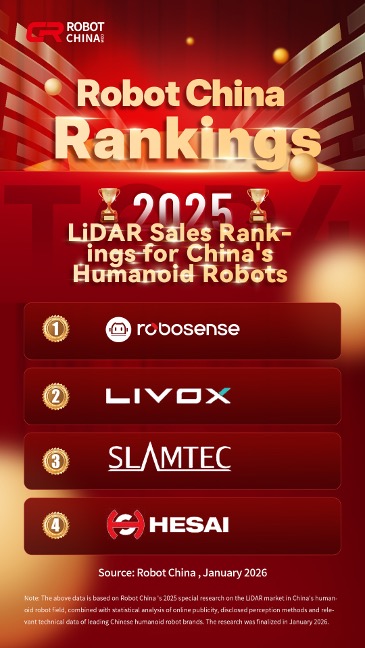
1. RoboSense
Founded in 2014, RoboSense listed on the Hong Kong Stock Exchange in January 2024 and became the world's #1 LiDAR brand by sales volume in 2024. In 2025, RoboSense topped the industry with 303,000 LiDAR units shipped in the robotics sector, a year-over-year increase exceeding 1,100%, setting an industry growth record. Among these, lawn mower robots and humanoid robot-specific products contributed core incremental volume. As of January 2026, the company has established partnerships with over 10 leading humanoid robot companies including Unitree, AgiBot (the top two in global humanoid robot shipments in 2025), Dobot, Galbot, Zhiji Dynamics, Guodi Co-build, and Pudu Robotics. In February 2025, it completed delivery of its one millionth LiDAR unit (to a humanoid robot company), becoming the world's first company to achieve one million high-line-count LiDAR units produced.
Its flagship product, the E1R all-solid-state LiDAR 144-line version, is precisely tailored to humanoid robot perception needs, featuring high resolution and close-range detection advantages, with full automotive-grade certification coverage, ensuring reliability for humanoid robots in complex scenarios. AgiBot's Lingxi X2 employs RoboSense's E1R digital solid-state LiDAR, which, combined with its vision system, constructs high-precision 3D environmental maps, providing the robot with 3D SLAM localization and autonomous obstacle avoidance capabilities.
Notably, robots on the CCTV Spring Festival Gala stage are generating sustained high interest. Unitree and Galbot, as humanoid robot brands that have officially announced their upcoming appearance on the Year of the Horse Spring Gala, have both established deep partnerships with RoboSense. It is expected that RoboSense products will appear on the Spring Gala stage alongside customer robots. On the Year of the Snake Spring Gala, the Unitree H1 robot was equipped with RoboSense LiDAR products.
RoboSense's advantages in securing the top position lie in: First, self-developed chips—its full-chain chip system breaks through performance bottlenecks, enabling digital upgrades across the entire product line, with product performance leading the industry and globally leading LiDAR chip technology. Its self-developed SPAD-SoC chip is the world's first to integrate SPAD receiving arrays with data processing SoC and achieve mass production. Its transmitter-side 2D addressable VCSEL chip is also the world's first mass-produced product using this technology. Through flexible management of scanning areas and energy optimization, it dramatically improves energy utilization efficiency and reduces overall power consumption by 70%, fundamentally suppressing high-reflectivity blooming phenomena.
Additionally, RoboSense is the world's first technology company to successfully apply the RISC-V instruction set architecture to LiDAR chips and achieve mass production, with multiple core self-developed chips including M-Core and SPAD-SoC already adopting this architecture. RoboSense's mass-delivered 144-line high-line-count solid-state product E1R is a generation ahead of competitors, virtually unique in the industry. Simultaneously, RoboSense is building an Active Camera that integrates LiDAR, cameras, and IMU based on solid-state LiDAR, advancing humanoid robot perception technology evolution.
Second, scaled production capabilities—million-unit scale orders and monthly delivery efficiency of 180,000 units form dual barriers in cost and capacity.
Third, ecosystem synergy—currently, the company has served over 3,400 global robotics and related industry customers, and over 310 automotive OEMs and tier-1 suppliers. Leveraging regional industrial clusters to shorten adaptation cycles, it can rapidly respond to humanoid robot technology iteration demands.
2. Livox
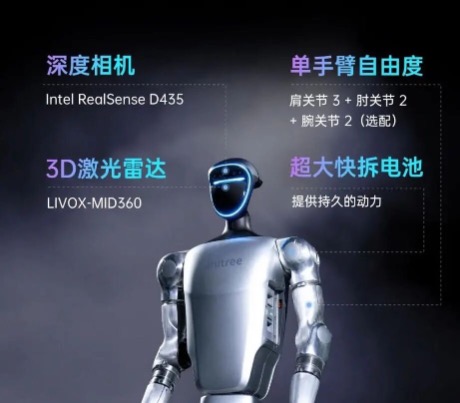
Founded in 2016, Livox is an independent company based on DJI's internal incubation mechanism, dedicated to 3D LiDAR technology development. The company ranks among the top three in the 2025 robotics LiDAR market. The company's flagship product, the Mid-360 hybrid solid-state LiDAR, features compact size, lightweight design, large FOV (field of view), and high resolution. As a product released in 2023, the Mid-360 still maintains advantages in cost and performance. Partner customers include Leju Robotics, AgiBot, Unitree, and Stardust Era, among others. Additionally, due to the high performance scalability of its non-repetitive scanning pattern, the Mid-360 still has significant algorithm development potential, and its application development in humanoid robot-related scenarios is worth anticipating.
3. SLAMTEC
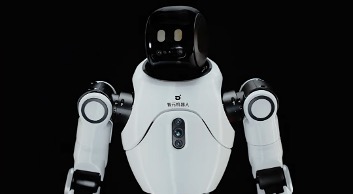
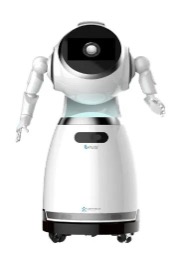
Founded in 2013, SLAMTEC is one of the world's earliest companies engaged in exploration and R&D of autonomous localization and navigation technology for robots, specializing in providing "eyes" for various types of robots—namely LiDAR, the SLAMWARE autonomous localization and navigation system, and universal robot chassis. In the humanoid robot sector, UBTECH's intelligent humanoid robot Cruzr integrates SLAMTEC's LiDAR products, enabling capabilities including free movement, greeting visitors, and handshakes and hugs.
4. HESAI
According to HESAI's official disclosure, its LiDAR is used in Stardust Era's humanoid robots and Weita Dynamics' robot dogs. Since its launch, HESAI's JT series mini 360° 3D robot LiDAR has seen rapid cumulative delivery growth and has been widely applied across multiple sectors including lawn mower robots, industrial, logistics, and autonomous driving systems, but with few humanoid robot applications.
Conclusion: Deep perception is a core necessity for humanoid robots to achieve autonomous movement and operational interaction, and LiDAR is the safest and most reliable solution to meet this need. Today's humanoid robot industry can leverage mature and reliable LiDAR technology from the outset, eliminating the need to invest massive costs in building supercomputing centers or piling up massive computing resources to tackle the challenges of pure-vision depth perception—this has also driven LiDAR sales in the humanoid robot sector to continuously climb.
Meanwhile, the maturity of array SPAD + 2D VCSEL solid-state LiDAR technology has enabled the rapid deployment of ideal RGBD sensors that integrate binocular RGB, dToF, and IMU in a unified package (such as RoboSense's Active Camera). Its compact, high-precision, and intelligent characteristics are perfectly suited to humanoid robot scenario application needs, and it is expected to become the mainstream direction for humanoid robot perception solutions in the future.
Key Technological Breakthroughs
Previous Article
About the Author
Robotics Insider
Industry analyst with 15+ years of experience covering robotics and automation technologies.
View all articles


