
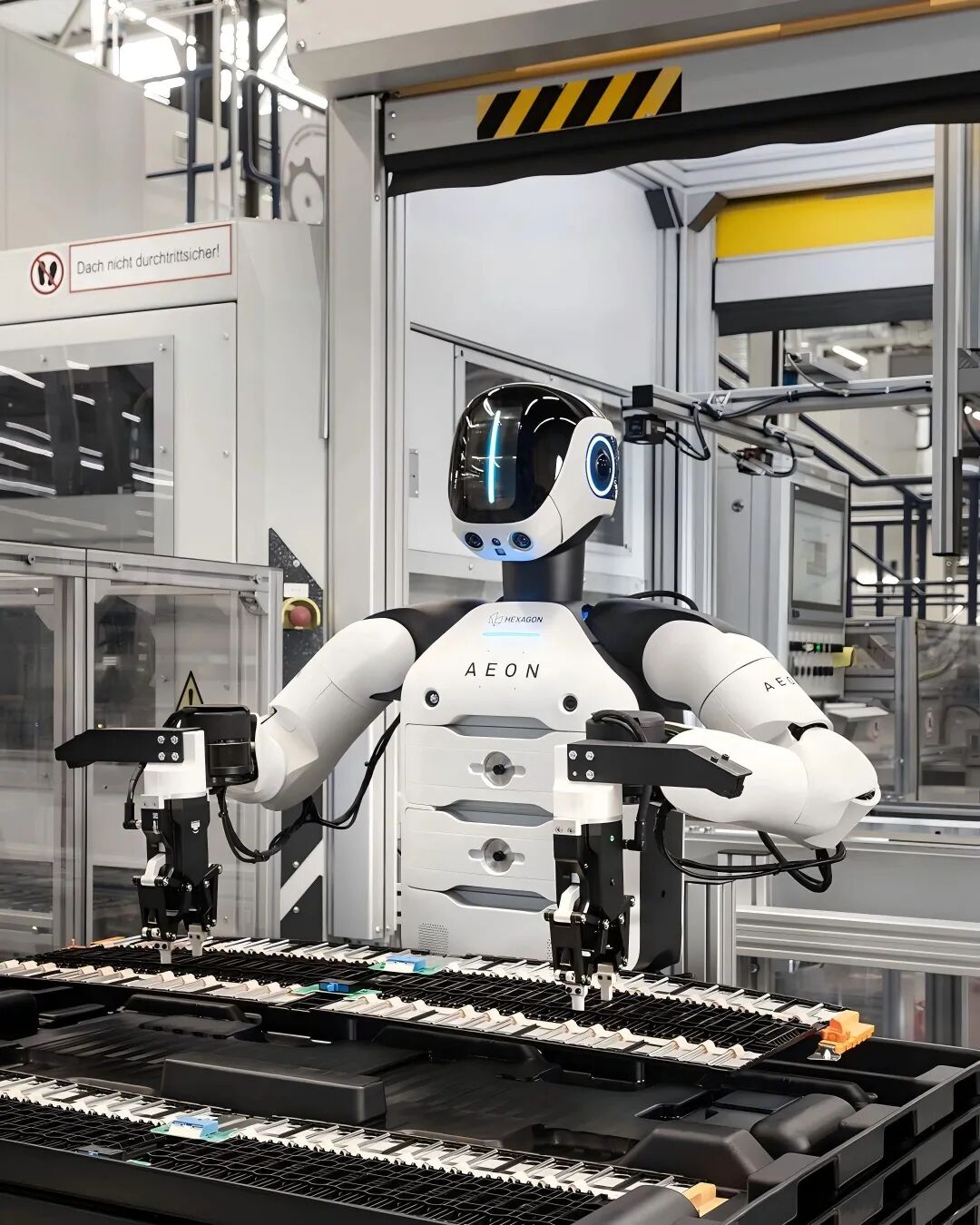
Recently, BMW announced that its factory in Leipzig, Germany, has introduced humanoid robots for real industrial scenario pilot applications for the first time. This also marks BMW Group's first deployment of humanoid robots and production pilot at a European factory.
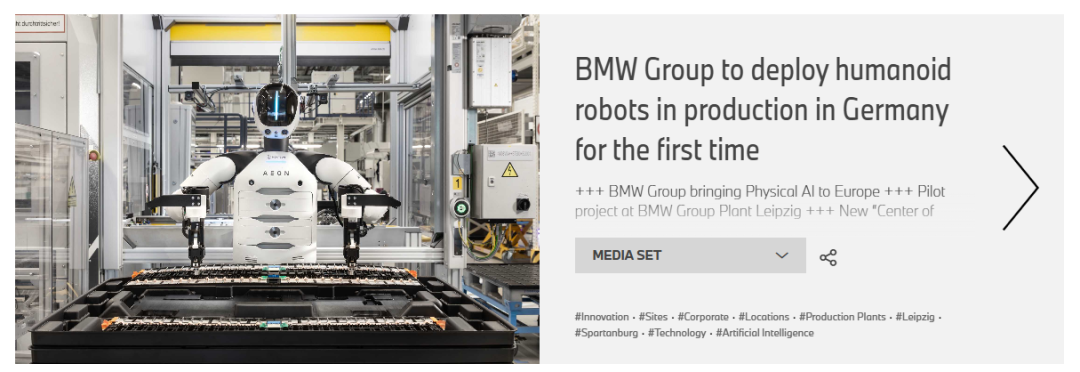
The project aims to integrate humanoid robot technology into existing automotive mass production processes and explore further applications in battery and component manufacturing.
BMW plans to deploy AEON, a humanoid robot product from Swedish company Hexagon Robotics, in this project. The robots will be used in assembly lines and electric vehicle high-voltage battery manufacturing, among other areas—positions where workers typically need to wear bulky protective gear.
AEON features a humanoid design, standing 1.65 meters tall and weighing 60 kilograms. Equipped with 22 sensors and a multi-camera vision system, it supports wheeled mobility and rapid end-effector replacement, adapting to different process requirements.
Notably, in this pilot application, the AEON humanoid robot is equipped with the AG series electric gripper from Chinese company Dahuan Robotics as its end-effector, undertaking critical operational tasks in battery assembly and component manufacturing.
Currently, AEON is undergoing test operations in battery assembly and component manufacturing processes at BMW's Leipzig factory, validating the humanoid robot's adaptability across different production environments.
This project builds on the successful experience from BMW's Spartanburg plant in the United States: in 2024, that facility deployed Figure 02 robots, assisting in the production of over 30,000 X3 vehicles, handling 90,000 components cumulatively with millimeter-level precision, validating the stability of humanoid robots on real production lines.
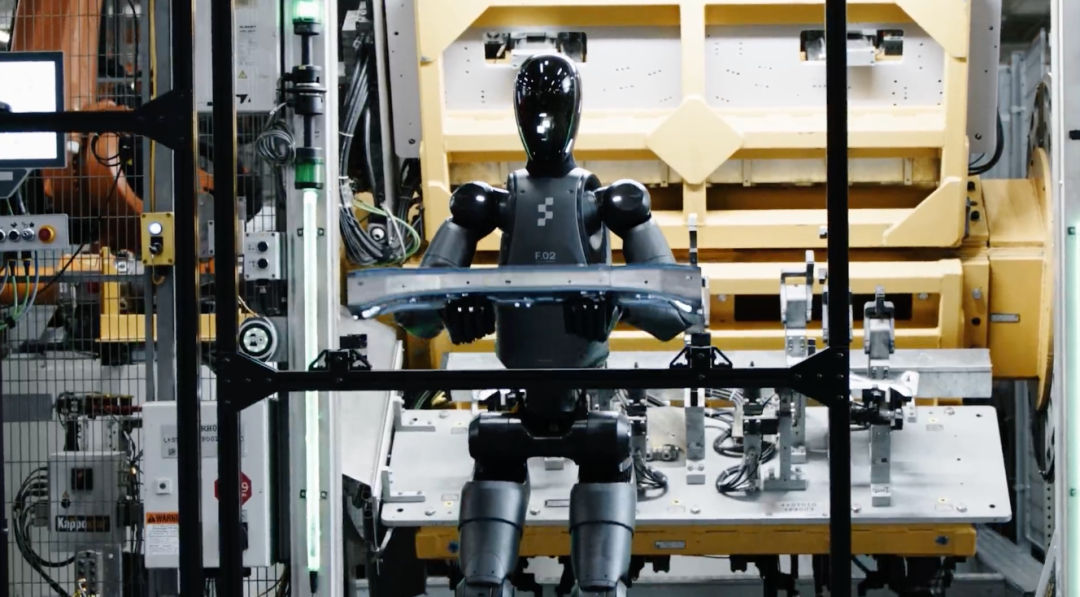
Michael Nikolaides, Senior Vice President of Production Network and Supply Chain Management at BMW Group, stated: "Our successful pilot at the Spartanburg plant in the United States proves that humanoid robots can not only operate in controlled laboratory environments but can also integrate into actual automotive manufacturing settings and perform stably."
BMW positions humanoid robots as a complement to existing automation systems, particularly suitable for monotonous, ergonomically demanding, or safety-critical processes. The goal is to reduce employee burden and improve working conditions, rather than simply replacing human workers.
This move marks the European automotive manufacturing industry's entry into a new phase of human-robot collaboration. Facing labor shortages and cost pressures, automakers like BMW are maintaining manufacturing competitiveness through robotics technology. According to Morgan Stanley estimates, the humanoid robot market could reach $5 trillion by 2050.
Currently, domestic Chinese automakers are also intensively introducing humanoid robots, including companies such as Xiaomi, BYD, XPeng, and Chery.
Key Technological Breakthroughs
Previous Article
About the Author
Robotics Insider
Industry analyst with 15+ years of experience covering robotics and automation technologies.
View all articles


