
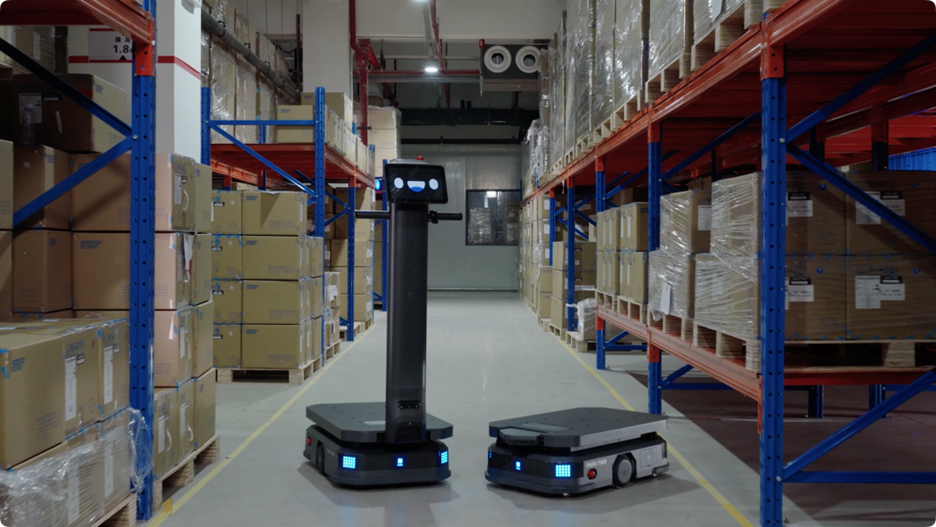
Achieving over 4,000 units shipped in just one yearafter launch, successfully serving dozens of Fortune Global 500companies; completing three generations of product iterationfrom T300 to T600 to T150, building a complete productmatrix covering 150-600kg payloads; penetrating all markettiers from Fortune 500 giants to small and medium-sizedfactories—Pudu Robotics' rise in the AGV/AMR industry tookmerely one and a half years.
Recently, Pudu launched its latest industrial deliveryproduct, the PUDU T150, filling the gap in the light-loadindustrial delivery robot segment. With the release of the T150, PuduRobotics' industrial delivery product matrix has become even more comprehensive—this"latecomer" in the AGV/AMR field has completed a marketlayout that traditional manufacturers would need over a decade to achieve.Behind this "overtaking" lies profound insights intoindustry needs and, more importantly, a systematic innovationthat reconstructs market logic.
In the wave of industrial transformation, truedisruption often comes not from isolated technological breakthroughs, but fromreconstructing the industry's "default rules." Whiletraditional AGV/AMR manufacturers remained fixated on providing customizedsolutions for top-tier clients, Pudu made the market realize that industrialdelivery is not an exclusive need of large industrial enterprises, but auniversal necessity across all industries.
Just as smartphones broke down the barriers of featurephones and ushered everyone into the mobile internet era, Pudu is usinga standardized product approach to transform industrial automatedmaterial handling from "a privilege for a select few enterprises"into "standard equipment for the majority of users."
01. Reconstructing the Customer Base: From"Exclusive Customization" to "Universal Accessibility"
The explosion of any industry begins with preciselyanchoring real market demand and breaking through establishedconsensus. Before 2024, the AGV/AMR industry had formed a seemingly"reasonable" yet highly limiting consensus: material handlingrobots were "exclusive to big players." Traditionalmanufacturers universally adopted a customization model, wherea single solution could cost tens to hundreds of millions of yuan,deploying dozens to hundreds of robot clusters, with deliverycycles lasting one year or even several years—capable only ofmeeting the scaled needs of top-tier clients like large manufacturing groups.But are industrial delivery robots truly meant exclusively for largeenterprises?
Pudu clearly recognized that the essence ofindustrial material handling is a universal need. Whether it's a Fortune500 factory with billions in annual output or a small factorywith just dozens of workers; whether it's a massive warehousespanning tens of thousands of square meters or a workshopstorage area of just a few hundred square meters—materialhandling is a daily operational necessity.
More importantly, with rising labor protectionawareness, most countries globally have mandated that liftingobjects over 20kg requires assistive tools—this concerns not onlylabor efficiency but also worker welfare.
Unfortunately, the traditional customization model has shutout vast numbers of mid-tier and SME industrial and warehousing logisticsclients. These customers might be in 3C electronics, plasticparts manufacturing, or small-item warehousing scenarioslike FMCG, cosmetics, and fast fashion—they neither have theresources to afford tens of millions in customization costs,nor do they need hundreds of robots in cluster deployment;perhaps a dozen or even just one robot would suffice. This overlookedmassive market is precisely the blue ocean Pudu discoveredwithin the seemingly red ocean.
Starting with its first product, the T300,Pudu established "standardization" as its core strategy—thisindustrial delivery robot with a maximum payload of 300kg is readyto use out of the box, like a smartphone, requiring no complexadaptation or existing environment modification,enabling flexible deployment.
Powered by Pudu's proprietary PUDU VSLAM+technology, its products can rapidly capture scene featurepoints, enabling quick deployment and stable, preciseoperation in ultra-large spaces up to 200,000 square meters,even adapting to environments with ceiling heights up to 30 meters.Its 60cm ultra-narrow passage capability allows it to navigatetight corridors with ease, while effortlessly crossing 2cm thresholdsand 3.5cm grooves, perfectly adapting to various industrial scenarios.
The subsequently launched T600 elevatedthe maximum payload to 600kg, dramatically improving single-tripefficiency, while innovatively offering dual configurations:standard and underride versions. The former integrates an operationscreen and power-assisted handle to optimize human-machineinteraction, while the latter adapts to low-clearance warehousingscenarios, further expanding customer coverage.
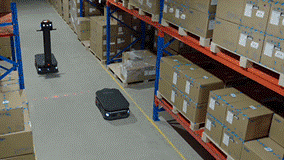
The newly launched T150 series, with a 150kgpayload capacity, focuses on rapid deployment, stableoperation, and cost-effectiveness, dramatically lowering thebarrier to industrial automation for manufacturers and logisticsoperators. It's particularly suited for 3C electronics, plastic partsindustries, as well as small-item warehousing scenariosin FMCG, cosmetics, and fast fashion sectors.
This "inclusive" product positioning hasenabled Pudu to rapidly cover customer segments that traditional manufacturerscouldn't reach: Large factories can purchase T600 units in bulkfor heavy material transport, while small factories can solveheavy-lifting challenges with just one T300 or T150; mega-warehousescan improve efficiency through multi-unit coordination, while smallstorage facilities can meet essential needs through flexibledeployment. This all-scenario adaptability has enabled Pudu tobuild a uniquely powerful market moat.
02. UltimateExperience: Making the Product a "Necessity" Rather Than a"Luxury"
A product's competitiveness ultimately comes down to everydetail of the user experience. So why have traditional AGV/AMR systemsdeterred small and medium-sized enterprises? Deployment cycles aremeasured in months, with large warehouses sometimes requiring year-longdelivery timelines; operation depends on specializedprogramming skills, requiring companies to employ dedicatedtechnical engineers for debugging and maintenance. For SMEs lackingtechnical resources and financial strength, such "automation" isundoubtedly a burden rather than a solution.
Pudu's core breakthrough lies in transformingcomplex industrial equipment into efficient tools that "anyone canuse." On the deployment front, leveraging VSLAM+technology and flexible deployment capabilities, what originally tookmonths has been compressed into completion within a single day—engineerscan complete installation and debugging on-site the same day,with no need for extended on-site presence. When production lines change,there's no need for time-consuming reconfiguration; simply adjustthe map through built-in software for rapid adaptation, withoutdisrupting normal operations. This "plug-and-play" model is,in a sense, as simple as consumer electronics installation,dramatically reducing time costs for enterprises.
On the operation front, Pudu hascompletely revolutionized the traditional interaction logic of industrialequipment. Its industrial AMR features an operation screen with anintuitive iPad-like design, with core functions presented in modularform—common operations like follow mode and point-to-pointdelivery are accessible with a single tap. Even ordinaryworkers with no programming background can quickly get up to speed ina short time, truly achieving "zero technical barrier"usage.
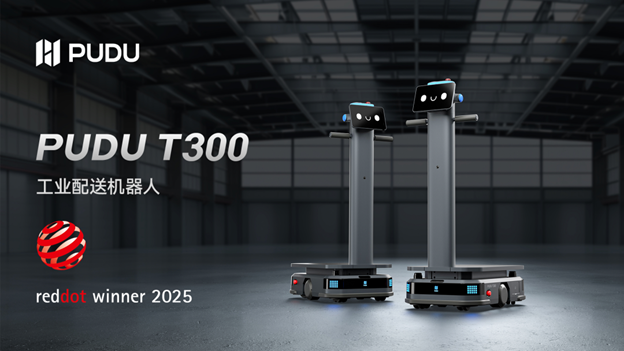
This experience optimization is not superficial,but rather stems from Pudu's deep understanding of industrial scenarios—SMEscannot afford to hire dedicated technical staff for a single material handlingrobot, nor can they bear prolonged deployment downtime.Therefore, Pudu's industrial delivery robots bring B2C-level userexperience to B2B products. From deployment efficiency tooperational logic, every design element centers on "loweringbarriers," transforming automated material handling from a "luxuryitem" exclusive to large enterprises into a "dailyessential" that all companies can easily acquire.
03. Driving Sales Through Product Excellence: ThePath to Creating Commercially Successful "Blockbusters"
The traditional AGV/AMR industry sales model is essentiallya "high-risk, low-efficiency" gamble. To secure a multi-milliondollar order, manufacturers must invest substantial manpower in on-sitesurveys, solution design, and repeated debugging, with paymentcycles often stretching for years. This not only ties up massivecash flow but also exposes them to potential projectuncertainties. This asset-heavy, long-cycle sales modelboth limits market expansion speed and deters numerousdistributors.
Pudu's standardization strategy hassimultaneously triggered an efficiency revolution on the sales side.Since products require no customization, the sales logicbecomes remarkably straightforward: customers simply selectbased on payload requirements—T300 (300kg payload),T600 (600kg payload), or the newly released T150(150kg payload)—with no need for complex solution design.Orders can be quickly fulfilled after placement. This "standardizedproduct sales" model has dramatically shortened sales cyclesand improved capital turnover efficiency.
For distributors, Pudu's productsrepresent an "easy-to-handle, high-return" qualitychoice. There's no need to build specialized technical teams—smallteams can handle both sales and basic service. The sales logicaligns seamlessly with Pudu's mature cleaning and food deliveryrobots, allowing existing channel resources to be directly leveraged.Just as Apple reduced sales difficulty through superior productexcellence, Pudu's standardized industrial AMR, with its "plug-and-play"characteristics, enables distributors to rapidly expand market coverageand achieve fast growth.

The reduction in sales costs and improvement inefficiency has made more distributors willing to join the Puduecosystem, allowing more customers to quickly access theproducts, ultimately driving rapid market share expansionand forming a virtuous growth flywheel. This "productexcellence-driven sales" model is precisely the key enginebehind Pudu's ability to overtake competitors and achieve commercialsuccess.
04. Beyond Industrial Delivery: "Full-ScenarioEmpowerment"
Traditional AGV/AMR systems often demonstrate applicationvalue only in industrial logistics. However, thecompetitiveness of a single product in a single scenario isultimately limited—ecosystem synergy across all scenarios iswhat builds a true moat. Pudu's core advantage lies in being one of thefew service robotics manufacturers with a full product matrix—from servicedelivery robots and cleaning robots to industrial delivery robots and evenembodied intelligence products, forming an intelligent equipmentecosystem covering multiple scenarios.
The benefits of this ecosystem synergy are first reflectedin customer repurchases. Many customers who have used Pudu'sCC1 cleaning robot, based on their trust in the brand qualityand product excellence, will prioritize Pudu's industrialdelivery robots when they have material handling needs. For example,if a hotel has previously deployed Pudu's food delivery and cleaningrobots, it can simultaneously introduce Pudu's industrialdelivery robots for luggage transport and delivery,dramatically improving operational efficiency. This cross-product-linetrust transfer significantly reduces market education costsand accelerates market penetration of Pudu's industrial AMR.
More importantly, Pudu's industrial AMR doesn'texist in isolation but can form deep synergies with otherproducts. In practice at Sunwoda, a global new energyleader, the T300 serves as a cross-production-line hub,achieving inter-line delivery through button callers,improving material turnover efficiency by 50%. Simultaneously,it forms a three-dimensional logistics system with HolaBot 2and works alongside CC1 to build a "logistics-cleaning-delivery"integrated intelligent network. Through real-time data sharingand intelligent scheduling, it achieves task coordination andresource optimization. This "full-scenario synergy"capability enables Pudu's products not only to solve individual painpoints but also to provide customers with integratedintelligent solutions.
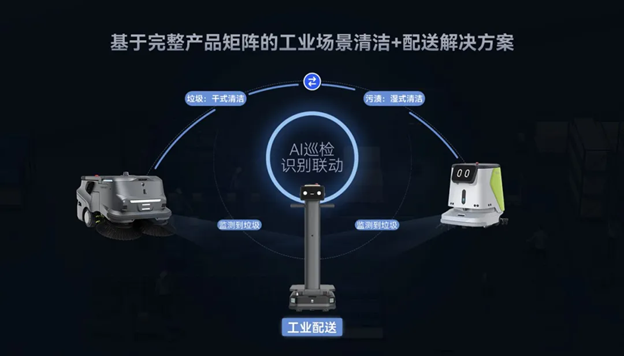
It's worth noting that the product definition ofPudu's industrial delivery robots itself originated from deep exploration ofscenario needs. Previously, some customers had attempted to use fooddelivery robots in industrial scenarios, and Pudu identified issuessuch as insufficient payload capacity, incompatible tray dimensions,and design aesthetics that didn't align with industrial environments.The company then specifically optimized payload capacity, trayspecifications, and body design to fully match the actualusage requirements of factories and warehouses. This "scenario-driveniteration" product logic has given Pudu's industrial AMRstrong market adaptability from the very beginning.
05. Behind the Overtaking: Redefining IndustrialAMR
Looking back at Pudu's industrial AMR overtaking journey,its essence is not simply "late-mover advantage," but rathera deep market restructuring and product redefinition. Whiletraditional AGV/AMR manufacturers used customization to define"industrial material handling equipment," Pudu has used standardizationto redefine the category—proving that industrial delivery robots canbe as plug-and-play as consumer electronics, can serve allcustomer tiers from top to bottom, and can achieve cross-scenarioempowerment through ecosystem synergy.
The T300, T600, and T150 product matrixcovers the core payload range from 150kg to 600kg, fillingmarket gaps across different price segments. Same-day deployment andzero-technical-barrier operation addresses the core pain points ofSMEs. Sales efficiency gains from standardization have built arapidly expanding distribution network. Full-categoryecosystem synergy has created competitive advantages that aredifficult to replicate. These four pillars togetherconstitute Pudu's "overtaking formula" in the industrial AMRsector.
Throughout this process, Pudu did not pursue extremebreakthroughs in isolated technologies, but rather, through systematicoptimization of market, product, sales, and ecosystem, discovered the corepath to large-scale industrial AMR adoption. Just as the CC1cleaning robot's "four-in-one" approach defined new standards forcommercial cleaning, Pudu's industrial AMR is rewritingindustry rules through "standardization, accessibility, andintelligence."
Looking ahead, Pudu's product matrix will continueto expand, and market coverage will become even broader.This industry miracle of "completing a decade's journey in twoyears" will ultimately prove that true innovation never comesfrom blindly following industry "conventions," but from startingwith user needs and redefining the value boundaries of products.Pudu's industrial AMR overtaking is just the beginning—anew era of industrial delivery, driven by standardization and empowered byecosystems, is arriving.
Key Technological Breakthroughs
Previous Article
About the Author
Robotics Insider
Industry analyst with 15+ years of experience covering robotics and automation technologies.
View all articles


